
Three ways into the same job
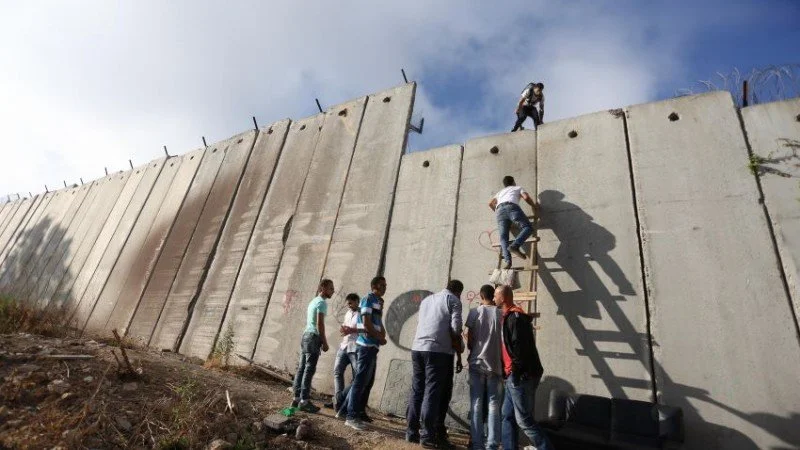
A detail that surprises people who do not work on this region: Palestinians working in Israel are not one group, and the survey has asked them since 2015 which of three arrangements they are working under.
One
A work permit. It is applied for by the Israeli employer, not the worker. Israeli security services screen the individual, and the permit that comes back names both the worker and the employer he is allowed to work for. Under the criteria published by the Israeli authorities in May 2023, permits were available to married men over 22 and single men over 27, with quotas set by profession. Construction was the largest at 80,000.
Two
Cross without a permit and actively looking for work.
Three
Hold an Israeli or Jerusalem identity card, which carries the right of entry and makes the permit system irrelevant. This mostly reflects where the boundary of the Jerusalem municipality was drawn in 1967 and who was inside it.
The three groups look different in the data. In the two years before October 2023, permit holders averaged 37 years old and 87 per cent were married, which follows from eligibility rules built around age and marital status. Men crossing without permits averaged 33 and 46 per cent were married. Identity-card holders reported the most paid days in a month, 25 against 19 for permit holders, which is what you would expect when your access does not depend on anyone renewing a document.
The pay was closer than the legal difference suggests: about 297 shekels a day on a permit and 262 without one, against 124 for work inside the West Bank.
The gap that mattered was not between legal and illegal work in Israel. It was between working in Israel and working at home.
There is one more thing worth knowing, and it is documented by researchers at the Bank of Israel rather than by me. Because the permit names a single employer, and because that employer can cancel it, a market grew up around the document itself. Adnan and Etkes estimated in 2019 that around 20,000 workers, some 30 per cent of Palestinians employed under permits, had bought their permits illegally for roughly 2,000 shekels a month, about a fifth of gross income, and typically worked for someone other than the sponsor named on the paper. Their conclusion was that the money went almost entirely to the traders.
A permit, in other words, was never only a piece of paper about legality. It was an asset with a price.
Figures are descriptive calculations from the public PCBS Labour Force Survey. Permit-market estimates from Adnan and Etkes (2019), Bank of Israel.
